


I have this conversation in the chair constantly. Someone tells me their hair gets greasy fast, and they want to know how to slow it down.
Most clients are not sitting in my chair trying to self-identify why their scalp is oily. They just know it happens. That is where the consultation matters.
Greasy hair is not a character flaw. It is information. Your scalp is telling you something. Maybe it is your genetics. Maybe it is hormones. Maybe it is diet. Maybe it is over-washing. Maybe it is dry shampoo buildup. Maybe it is conditioner being applied where it does not belong.
The best thing you can do is stop guessing and start observing.
At a glance:
- Greasy hair is usually driven by a few key factors: genetics, hormones, diet, lifestyle, and product habits.
- Over-washing is the number one habit I see making it worse. The scalp produces oil for a reason, and constantly stripping it can leave the scalp feeling like it is always catching up.
- Healthy shine reflects light. Grease leaves a residue. That is the fastest way to tell the difference.
- "Hair training" does not work the way the internet says it does. Your scalp can adapt to a better routine. It cannot override your genetics or hormones.
- A greasy scalp and dry ends are two different problems. Cleanse the scalp. Condition the ends.
- Timeline: as little as two weeks when the cause is routine-based, and months when it is hormonal or internal.
Index
- What Actually Causes Greasy Hair
- What Does Greasy Hair Look Like?
- The One Habit That Makes Oily Hair Worse
- Does Hair Training Work?
- Does Your Hair Type Change How Fast It Gets Greasy?
- Oily Scalp With Dry Ends: How I Treat Both
- How Long Before You See a Change?
- What I Tell Clients That Goes Against the Advice Online
What Actually Causes Greasy Hair

Greasy hair is usually driven by a few key factors: genetics, hormones, diet, lifestyle, and product habits.
Most clients are not sitting in the chair trying to self-identify why their scalp is oily. They just know their hair gets greasy fast, and they want to know how to slow it down.
That is where the consultation matters.
The questions I ask before I give anyone advice
As hairstylists, it is our job to ask the right questions:
- How often are you shampooing?
- Are you using dry shampoo?
- Are you working out?
- Has anything changed hormonally?
- Are you on new medication?
- Has your diet changed?
- Are you noticing oil only at the scalp, or are your ends also feeling dry?
Every oily scalp is not coming from the same place.
Sometimes it is genetic. Sometimes it is hormonal. Sometimes the scalp is reacting to lifestyle or product choices. And on occasion, it is from using too much dry shampoo that is overly drying, causing the scalp to feel misaligned with what it actually needs.
Dry shampoo is not a replacement for washing

Dry shampoo can be helpful, but it is not a replacement for washing. If you keep layering it over oil, sweat, and buildup, your scalp is eventually going to respond.
If you are relying on it more than a couple of days a week, it is worth revisiting how to use dry shampoo properly, and understanding what scalp buildup actually is.
Over-shampooing is the other common trigger
If you are shampooing too frequently, especially more than once a day, your scalp may start to feel stripped. Your body does need some of its natural oil to keep the scalp environment comfortable and balanced. When you constantly remove that oil, the scalp can start to feel like it is always catching up.
Not all cleansers do this equally, which is something we get into in can shampoo damage hair.
The goal is not to strip the scalp into submission.
The goal is balance.
What Does Greasy Hair Look Like?
You can usually see an oily scalp before you touch it.
With a normal to drier scalp, the hair near the root still looks similar to the mid-strand. It has movement. It does not separate too quickly. It does not look overly shiny right at the scalp.
With an oily scalp, the new growth starts to look shiny quickly, often within a day or a day and a half after washing. You may see it around the:
- Part
- Hairline
- Crown
- First inch near the scalp
The hair starts to separate into pieces instead of moving freely. It loses that clean, airy look and begins to look collected, slick, or heavy.
What greasy hair feels like
By touch, greasy hair has a residue to it.
It is not exactly slippery in a clean way. It has more of a coated feeling. When you roll the hair near the root between your fingers, it can leave behind a slight film or oiliness on your fingertips.
Greasy hair vs. shiny hair: how to tell the difference

That is usually the difference.
Healthy shine reflects light.
Grease leaves a residue.
If you are still not sure whether what you are dealing with is oil or something else entirely, our guide to dry scalp vs oily scalp walks through both.
The One Habit That Makes Oily Hair Worse
Over-washing.
That is the number one thing I see once someone realizes they have an oily scalp.
They start shampooing more and more often, trying to get ahead of the oil. But for many clients, that can make the scalp feel even more out of balance.
The scalp produces oil for a reason. It is there to protect the skin and support the scalp environment. When you constantly strip it away, the scalp may feel like it needs to produce more.
I see this all the time with clients who complain about oily roots. They think the solution is more shampooing, more scrubbing, more cleansing, more dry shampoo in between. There is a time and place for double shampooing, but it is not every single wash.
The scalp does not always need more aggression.
It usually needs a better rhythm. If you have never worked out what yours should be, start with how often you should wash your hair, and use something that cleanses without that stripped feeling, like Goldie Locks® Signature Shampoo.
Does Hair Training Work?
This is an interesting one because "hair training" does not really have one clear definition.
Can your scalp adapt to a better routine over time?
Sometimes, yes.
Can you train your hair to completely change what it is genetically or hormonally designed to do?
No.
Your oil production is influenced by genetics, hormones, internal health, diet, lifestyle, and scalp condition. So if you are trying to "train" your hair only from the outside, while ignoring what is happening internally, it may never work the way you want it to.
What I usually see is that people confuse hair training with avoiding shampoo.
They go longer and longer between washes, layer on dry shampoo, and tell themselves their scalp is adjusting. But in the chair, I often see:
- Buildup
- Oil
- Irritation
- Flakes
- Hair that looks heavy at the root and dry through the ends
That is not training.
That is your scalp asking for a reset.
The better approach is not to see how long you can go without washing. The better approach is to find the right wash rhythm for your scalp.
Does Your Hair Type Change How Fast It Gets Greasy?

Yes, and it explains why two people with identical habits get completely different results. If you have never worked out where you land, our guide to hair texture is the place to start.
Fine and straight hair shows oil fastest. The strands sit close together and close to the scalp, so sebum travels down easily and coats everything. There is also less surface area for it to spread across. If this is you, our guide to fine hair is worth your time.
Thick or coarse hair hides oil longer, simply because there is more hair for the sebum to spread across.
Curly and textured hair slows sebum down. The bends in the strand make it hard for oil to travel, so it pools at the scalp instead. That is why the scalp can feel oily while the ends still feel parched.
Oily Scalp With Dry Ends: How I Treat Both
This is extremely common.
Greasy scalp. Dry ends.
And it makes sense, because the scalp and the ends are two completely different environments.
Your scalp is skin. It produces oil.
Your ends are the oldest part of your hair. They have been through heat, color, brushing, sunlight, ponytails, friction, and everyday damage.
So I treat them differently.
For the scalp: cleanse without stripping
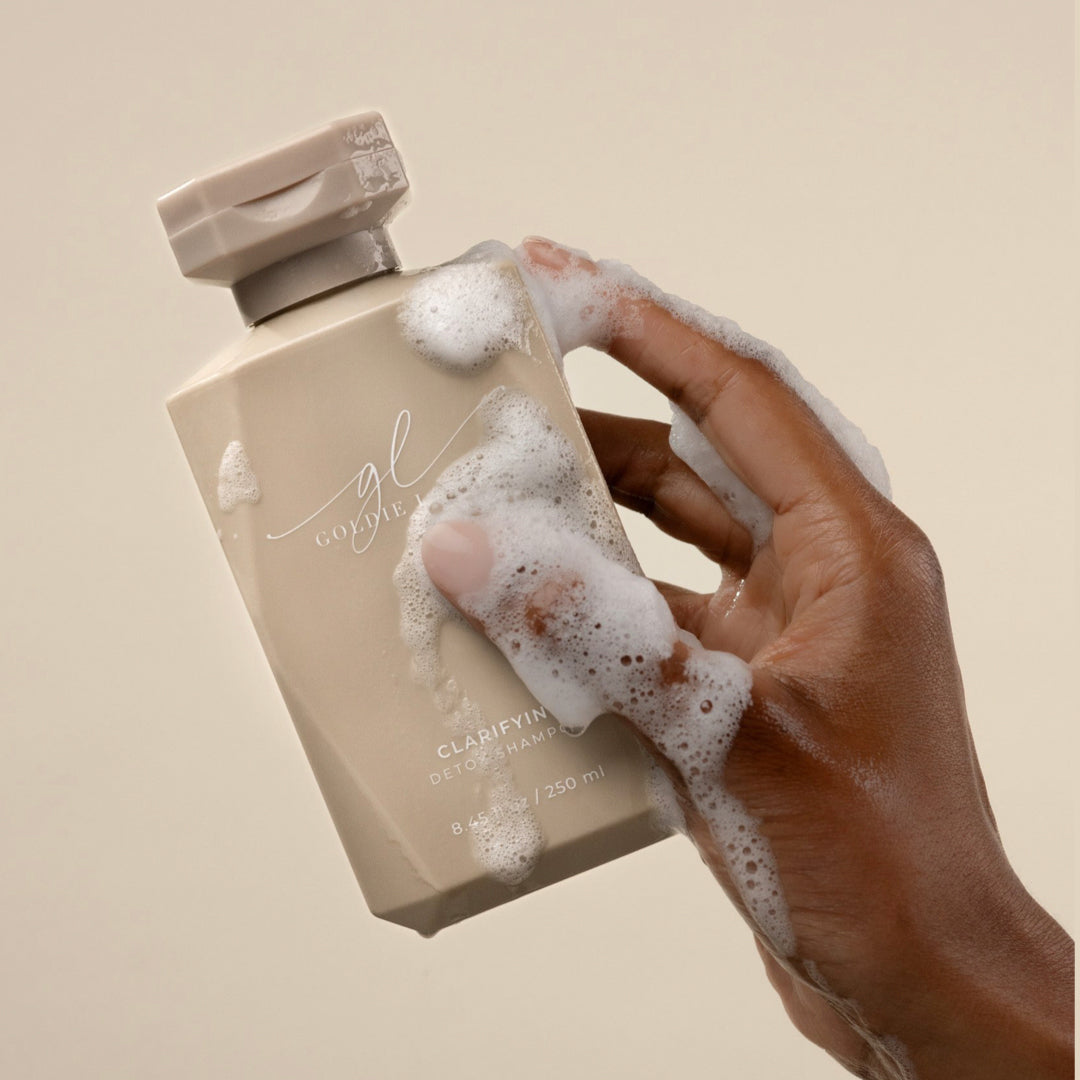
For the scalp, I want a non-abrasive cleanse that helps reset without making the scalp feel stripped or angry. Depending on the client, that could be a Goldie Locks® Clarifying Shampoo, a scalp-focused cleanse, or a low-pH approach that helps the scalp feel more balanced.
For the ends: moisture and protection

For the ends, I go in the opposite direction.
That is where I want moisture, softness, and protection.
I would use Goldie Locks® Signature Hair Mask through the mid-lengths and ends, not on the scalp. Then I would recommend Signature Hair Serum one to two times a day through the mid-strand and ends to help keep those older, drier areas soft, hydrated-feeling, and protected from breakage.
The mistake is treating the whole head like it has the same problem.
It does not.
Cleanse the scalp.
Condition the ends.
How Long Before You See a Change?
It depends on why the scalp is oily in the first place.
If it is hormonal, it can take months.
If it is tied to diet, lifestyle, medication, or internal imbalance, it can also take time, because the oil on your scalp is connected to what is happening inside your body.
But if the oiliness is mostly coming from product misuse, over-washing, dry shampoo buildup, or an inconsistent routine, you can sometimes see a change much faster.
I have seen clients notice a difference in as little as two weeks when the issue is more routine-based than deeply internal.
The quickest changes usually happen when we correct the obvious habits:
- Over-washing
- Conditioner on the scalp
- Too much dry shampoo
- Not cleansing thoroughly
- Using the wrong products for the scalp
- Ignoring the dry ends while attacking the roots
Once the routine is better aligned, the scalp can start to feel more balanced.
But it takes consistency.
What I Tell Clients That Goes Against the Advice Online
I do not believe everyone should stop shampooing their hair so often.
That advice is everywhere online, and I think people need to be careful with it.
Your skin and hair pick up more than you think: oil, sweat, pollution, product buildup, environmental debris, whatever your day has exposed you to. Then you lay that hair on your pillowcase at night.
If you are avoiding shampoo for too long because someone told you it will "train" your scalp, think twice about who is giving you that advice.
As a stylist, I see the ripple effect:
- The scalp starts to feel coated
- The roots get oily
- The hair looks dull
- The face can start breaking out around the hairline
- The pillowcase gets dirty faster
- The ends are still dry, because oil at the scalp is not the same as hydration through the hair
For some people, washing less may help. For others, it makes everything worse.
The right advice is not "wash less."
The right advice is: wash appropriately for your scalp, your lifestyle, your product use, and your hair type.
Your Scalp Is Telling You Something
Greasy hair is not a character flaw. It is information.
Once you understand what your scalp is asking for, your routine gets a lot easier. Start by observing:
- How fast does your scalp get oily?
- What are your ends doing?
- How often are you washing?
- Are you using dry shampoo as a helper or as a replacement?
- Does your scalp feel clean, tight, itchy, coated, or balanced?
Key Takeaways:
- Every oily scalp is not coming from the same place. Genetics, hormones, diet, lifestyle, and product habits all feed into it, so the fix depends on the cause.
- Over-washing is the habit I see making it worse most often. The scalp produces oil for a reason, and constantly stripping it can leave it feeling like it is always catching up.
- Healthy shine reflects light. Grease leaves a residue. If rolling the root between your fingers leaves a film, that is oil, not shine.
- Your scalp can adapt to a better routine. It cannot override your genetics or hormones. That is the honest answer on hair training.
- Cleanse the scalp. Condition the ends. A greasy scalp and dry ends are two different environments, and treating the whole head the same way is the most common mistake I see.
- Dry shampoo is a helper, not a replacement for washing. Layered over oil, sweat, and buildup, it becomes part of the problem.
- Give it two weeks if the cause is routine-based, and months if it is hormonal or internal. Consistency does the work.
FAQs About Greasy Hair
Why does my hair get greasy one day after washing it?
That timing is actually typical for an oily scalp. The new growth starts to look shiny within a day or a day and a half after washing, usually around the part, hairline, and crown. Most of the time it is a combination of your natural oil production plus buildup that your shampoo is not fully removing. A clarifying wash every one to two weeks is the first thing I would try.
Why does my hair look greasy right after I wash it?
Usually one of three things: conditioner placed at the scalp instead of the mid-lengths and ends, product buildup that a regular shampoo is not lifting, or not cleansing thoroughly enough at the root. Work the shampoo in with your fingertips and give it a real minute instead of a quick pass.
Why does my hair get greasy overnight?
Your pillowcase holds onto skincare, sunscreen, sweat, and oil, then hands all of it back to your hair while you sleep. Change it weekly. If you are stretching washes and layering dry shampoo on top, that adds to it.
Does washing my hair less often reduce oil?
Not the way people hope. The idea that you can train your scalp to produce less oil is not well supported. Your scalp can adapt to a better routine, but it cannot override what your genetics and hormones are doing. What helps is washing consistently with something that cleanses without stripping, so you stop swinging between over-washing and stretching too far.
How do I manage an oily scalp day to day?
Find a wash rhythm your scalp is comfortable with and hold it. Shampoo goes at the roots, where the oil actually is. Conditioner goes from the mid-lengths down. Keep your hands out of your hair, use a clean brush, change your pillowcase weekly, and treat dry shampoo as a helper between washes rather than a replacement for one.
Can conditioner make my hair greasy?
Yes, if you put it at the roots. At the scalp it weighs the hair down and the roots look oily within hours. Keep it on the mid-lengths and ends.
Is greasy hair a sign that my hair is unhealthy?
No. Oil at the scalp is normal and your scalp needs some of it. Excess oil at the root is a balance issue, not a damage issue. If the oiliness comes with flaking, itching, or tenderness that will not settle, that is worth having a dermatologist look at, because it may be a scalp condition rather than a routine problem.
How often should I use a clarifying shampoo if my hair gets greasy fast?
Every one to two weeks for most people. Daily use is not the goal, since the point is to reset the scalp, not to strip it.